Sub-Total: $0.00
Questions and Answers
First of all, I evaluated all of the data for the first month of treatment and have prepared a report for publication. In this report, I evaluated the effect of gallium nitrate on 100 horses and found the following responses to treatment during the first 14 days of a month, and also noted the residual effect in the following two weeks while off treatment. The treatment produced a strong, lasting response. The horses become sound at a steady rate and have less lameness. After about 6 months, over 90 percent of all the horses treated with gallium nitrate for navicular disease and related conditions, became sound. However, I was not able to evaluate any data statistically after the first month, since so many horses had become sound and they dropped out.
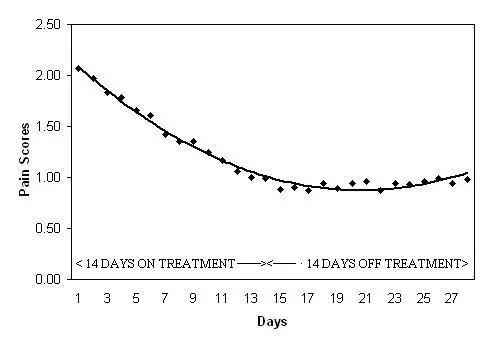
Figure 1. Effect of gallium nitrate treatment on mean pain scores with treatment given only during the first 14 days
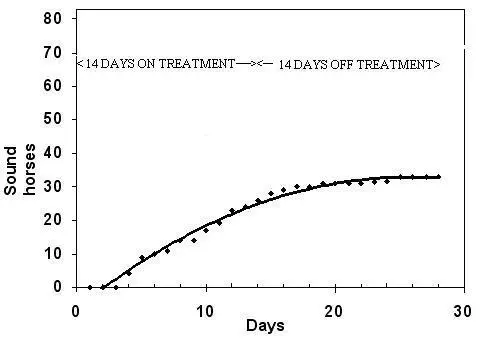
Figure 2. Number of horses sound on each day after initiation of gallium nitrate treatment for 14 days
Article Abstract
Navicular disease, also known as caudal heel syndrome and related foot conditions in horses cause much misery, pain and lameness. Classical treatments often do not provide satisfactory results and the horse remains lame and occasionally the horse must be euthanized. It was hypothesized that gallium nitrate, a compound reported to have anti-aluminum, anti-iron, anti-inflammatory, anti-bacterial, anti-hypercalcemic and anti-bone-resorptive activity, would be a safe and effective treatment for navicular disease. Horses diagnosed with navicular disease and non-responsive to classical treatments were treated orally with 500 cc of a one percent gallium nitrate aqueous solution in a two-week on and two-week off protocol. Treatment reduced mean pain scores fifty percent within 14 days, as measured using a five point scale of observed lameness. Mean pain scores for the second two-week period were statistically lower than the mean pain scores of the first two-week period (p < 0.0001). Complete soundness was achieved in 33 out of 83 horses in less than 28 days, with 24 out of the remaining 50 horses showing improvement in that period, for a total of 57 (69%) horses becoming better. None were worsened and none were euthanized. Most horses remained sound long after treatment was terminated. No side effects, toxicity or sequela were reported. Additional observations revealed that continuous daily gallium nitrate treatment, rather than treatment during alternate two week periods, was more effective. Oral gallium nitrate in the dosages and solution strengths used in this trial appeared safe and effective in the treatment of navicular disease and related conditions and treatment appears curative. Oral gallium nitrate is an alternative treatment for navicular disease that appears much more effective than classical treatments, and it may, upon favorable replication of these results, become a first-line treatment for navicular disease and related conditions with an expectation of curative effects. Placebo controlled, blinded trials demonstrating effects of daily oral gallium treatment for a minimum of 3 months are needed to confirm and extend these preliminary observations.
Since I started using gallium nitrate in 1996, about 50,000 daily doses of 1% gallium nitrate have been administered to horses for navicular disease, with no reports of toxicity. These are historic and important results, not only in the treatment of navicular disease in horses, but also because they are also the first results of administering ORAL Gallium to horses for any condition, and have the potential to open Gallium treatments of many inflammatory diseases in all vertebrate species. My horses, named Don Dee and his full brother Sharpe have both been on gallium nitrate for years following this protocol, with no health issues.
First, I believe that the 14 day on and 14 day off protocol used in the research trial was insufficient, and that an EVERY DAY OF THE MONTH on gallium treatment for three to six months, with an every other day follow on or maintenance program after the first three months would be vastly preferred. I.E.: Give gallium nitrate daily for 3 to 6 months then consider reducing dosage.
DILUTION DIRECTIONS for 14% Concentrate Gallium Nitrate to the 1% Gallium Nitrate solution:
To dilute an entire “14% Concentrate Gallium Nitrate 500 ml” bottle, pour the entire “14% Concentrate Gallium Nitrate 500 ml” bottle into a plastic water bucket, already containing 1.72 gallons of water. Stir well. This makes 14 daily (500 ml/cc) dosages of the 1% gallium nitrate solution. Re-bottle the 1% solution into 14 (500 ml/cc) bottles. One can use empty, clean, drinking water bottles found at grocery stores. Label each bottle with the words: “1.0% GALLIUM NITRATE – NOT FOR HUMAN CONSUMPTION.” Stir one 500 ml bottle of the 1% Gallium Nitrate solution into the horse’s feed (in a plastic feed bucket). Give once per day. Do not add solution to hay or drinking water since it is likely to be lost and not consumed. These instructions for daily dosages are for an average 1200 pound horse. Reduce dosage proportionately for ponies, and increase dosage proportionately for larger horses.
DILUTION DIRECTIONS for 42% Concentrate Gallium Nitrate to the 1% Gallium Nitrate solution:
To dilute an entire “42% Concentrate Gallium Nitrate 500 ml” bottle, pour the entire “42% Concentrate Gallium Nitrate 500 ml” bottle into a plastic water bucket, already containing 5.42 gallons of water. Stir well. This makes 42 daily (500 ml/cc) dosages of the 1% Gallium NItrate solution. Re-bottle the 1% mixture into 42 (500 ml/cc) bottles. One can use empty, clean, drinking bottles found at grocery stores. Label each bottle with the words: “1.0% GALLIUM NITRATE-NOT FOR HUMAN CONSUMPTION.” Stir one 500 ml bottle of the 1% Gallium Nitrate solution into the horse’s feed (in a plastic feed bucket). Give once per day. Do not add solution to hay or drinking water since it is likely to be lost and not consumed. These instructions for daily dosages are for an average 1200 pound horse. Reduce dosage proportionately for ponies, and increase dosage proportionately for larger horses.
ANSWER: There are several other findings.
First, aluminum shoes prevent these horses from becoming and remaining sound. They seem hypersensitive to Aluminum III ions. This is explained in the Discussion section of my article. NOTE: Aluminum shoes probably do not cause navicular disease, but they certainly prevent gallium from working.
Second, nearly all horses become sound using gallium nitrate over a few months, not overnight (as all of us want)! Some horses need gallium nitrate for only a few months and do not relapse for many months. Others, perhaps the more seriously diseased, need to stay on a gallium nitrate maintenance protocol to remain sound.
Third, no toxicity or adverse side effects have been reported.
Fourth, gallium nitrate appears to have utility in treating other horse disorders including founder, leg impact injuries, foot abscesses, arthritis and skin infections, all of which are benefited by the anti-inflammatory properties of gallium nitrate.
Gallium nitrate does not appear to be effective for spurs on navicular bones, but it does seem to resolve pain.
I think the only time that a topical treatment will work is in the case of bacterial navicular disease. This is a disease where the bursa is bloody and infected with bacteria. In that case, topical gallium nitrate should work very well and very rapidly, perhaps producing total soundness in just a few days.
Topical treatment was also suggested from the astonishingly fast results that I personally had in treating my own “frozen shoulder” condition with a 40-50% topical gallium nitrate solution. These extremely strong gallium nitrate solutions become so viscous that they become “oily”, and have a very definite oily feel on skin. Rather than suffer pain [feels like broken glass with much popping (crepitus) in shoulder joint] for several years as is the normal progression of “frozen shoulder”, I was essentially free of the pain and crepitus in about a week, but the concentrated gallium nitrate did sting my skin a bit. Ever try to sleep in a bed full of broken glass? That is what sleeping with “frozen shoulder” feels like.
Really good news! Diane S. in California reported on May 10, 2005 that her horse, who had been lame for 4 years with navicular disease, went completely sound in 4 days using topical gallium nitrate! She said that she soaked a rag in 14% gallium nitrate solution and put it next to the sole and frog under the foot (no shoe) and then attached and covered the rag up and over the hoof with lots of duct tape to hold the rag in place. FOUR DAYS!
Good News! Veronique M. in Lockhart, TX found she could terminate nearly immediately the pain associated with thrush by painting her horse’s feet with 14% gallium nitrate, working it well into infected tissue. She said the thrush went away fairly quickly. She says that gallium nitrate topically applied is the cure for thrush in horses’ feet. She also treats laminitis the same way in her miniature horses. I have two minis with green grass (spring)-induced laminitis and am treating them by painting their feet with the 42% solution and giving them oral gallium nitrate. It seems to greatly reduce pain and make their lives better. However, one must find the cause of laminitis and make changes in feeding and pasturage to gain their natural benefits. See www.safergrass.org for more information and search this google search.
ANSWER: He is totally sound and a really nice horse, but without his gallium nitrate he usually goes lame within 6 months. He scared me recently when he and his full brother, Sharpe, escaped their pasture and galloped off down the highway pounding the pavement for over a mile. They sent sparks flying from all eight steel shoes, and sent automobiles off the highway. About a mile down the highway, we caught them and brought them home. Don Dee was a touch gimpy after that, so I doubled his Gallium dose that evening and there was no further lameness the following morning. This anecdote serves to show how an extra dose of gallium nitrate can be helpful to prevent over work or abuse from causing a lameness issue.
Today, June 29, 2005, Don Dee is a sad sight. We put our two American miniature horses in with him and his brother for about 30 minutes last night. Those minis darn near killed my two big seventeen-handers! They ran them into the ground. The big guys were making huge laps around the pasture at full speed, while the minis were making little laps nearer the center of the pasture, producing the appearance that the minis were staying on the same lap as the big guys. Don Dee was really tired and totally exhausted from running around like a chicken with its head cut off, and he poked around all day today like he was sore, not lame, but really sore from being out of shape. The minis just did their thing and wore out my big guys, with no wear and tear on them! You never know how things will work out!
ANSWER: According to this 1997 posting on the Archive.Org WayBack Machine, I started Don Dee’s treatment May 15, 1997. The first archived posting of this page was the November 1, 1996 version. You can see many of the various versions of this page from November 1, 1996 to now on the WayBack Machine of the Internet Archive here.
ANSWER: That is the 64,000 question. It is not a sex issue. I have seen this on various occasions, and I can only guess. Here are the facts. Gallium goes to three types of tissues. First, cancerous tissue, second bacterially infected tissue, and third inflamed tissue. I don’t know why, but that is the nature of Gallium according to the scientists that have studied these questions. I suppose that if a horse had multiple problems, perhaps inflamed intestines or another organ, and/or a severe bacterial infection and/or even a cancerous mass, then the Gallium would end up in those tissues, thus being diluted, resulting in very little or none getting into the navicular tissues. Consequently, if there is little or no improvement in lameness, the Gallium may be working in some other tissues. I suspect that a radioactive-Gallium scan would show the tissues that Gallium is migrating to. You might contact a university affiliated large-animal veterinary hospital to see if they do radioactive Gallium-scans and see if your horse has other hidden inflammatory issues. This question could be answered, if you have enough money for that kind of testing. On the other hand, this is why I recommend treating for at least 6 months; certainly there is benefit from gallium nitrate treatment somewhere.
ANSWER: The antibacterial effects of gallium are extremely broad, since they stop all iron dependent bacteria and fungi in their tracks by immediately terminating their growth. Since it does not kill them outright, they do not become resistant to gallium. According to this World patent application WO/2007/053581 iron-dependent pathogenic microorganisms comprise: Streptococcus, Staphylococcus, Yersinia, Salmonella, Chlamydia, Coxilla, Ehrlichia, Francisella, Legionella, Pasteurella, Brucella, Proteus, Hilicobacter, Klebsiella, Enterobacter, Escherichia, Tropheryma, Acinetobacter, Aeromonas, Alcaligenes, Campylobacter, Capnocytophaga, Bacillus, Clostridium, Corynebacterium, Erysipelothrix, Listeria, Mycobacterium, Pseudomonas, Streptococcus mutans, Streptococcus sanguis, Streptococcus gordonii, Atopobium parvulum, Porphyromonas gingivalis, Eubacterium sulci, Staphylococcus aureus, Streptococcus pneumoniae, ß-hemolytic streptococci, Cory neb acterium minutissimum, Microsporum audouinii, Microsporum canis, Microsporum gypseum, Microsporum canis, Sporothrix schenckii, Trichophyton rubrum, Trichophyton mentagrophytes, Pityriasis versicolor, Exophiala werneckii, Trichosporon beigelii, Malassezia furfur, Fusarium spp., Aspergillus spp. and the like; including the microorganisms that are known to have become resistant to first-line antibiotics. Such microorganisms include Escherichia coli O157 (a causative organism for gastroenteritis, haemorrhagic colitis or urinary and genital tract infections), vancomycin-resistant Enterococcus faecalis (a causative organism for endocarditis, urinary tract infections, and wound infections), methicillin-resistant Staphylococcus aureus (MRSA; a causative organism for various skin infections, eye infection, wound infections, and so forth), Salmonella LO typhi (the causative organism for typhoid fever), and the like, and fungi, such as Candida albicans, Microsporum canis, Sporothrix schenckii, Trichophyton rubrum, Trichophyton mentagrophytes, Malassezia furfur, Pityriasis versicolor, Exophiala werneckii, Trichosporon beigelii, Coccidioides immitis, Histoplama capsulatum, Blastomyces dermatitidis, Aspergillus fumigatus, Epidermophyton spp., Fusarium spp., Zygomyces spp., Rhizopus spp. Mucor spp., and so forth.
To answer your question about treating your horse’s skin infections, this patent also reads: “Miscellaneous Applications of gallium compounds may be utilized in many different applications other than those described in the previous sections. For example, gallium compounds may be applied topically or directly to a body area, including an open wound and an internal organ or tissue exposed to an outer environment during surgery in addition to an external area, that needs to be protected from or is afflicted with various infections caused by pathogenic organisms. Such infections include, but not by way of limitation, skin infections, such as cellulites, folliculitis, boils, carbuncles, erysipelas, impetigo, erythrasma, paronychia, staphylococcal scalded skin syndrome, candidiasis (e.g., oral thrush), ring worm, tinea versicolor, etc. as well as eye infections, such as blepharitis, hordeola, conjunctivitis, etc., and nasal infections. Causative organisms for skin infections include, but are not limited to, species of Staphylococcus, such as S. aureus and S. epidermidis; Group A streptococci, such as Streptococcus pyogenes; Pseudomonas aeruginosa, and the like. Typical yeasts or fungi that cause skin infections include Candida albicans, species of genus Microsporon, such as M. auduini and M. canis; species of Trichophyton, such as T. metagrophyte and T. tonsurans, and the like. Causative organisms for eye infections include Staphylococcus aureus, Streptococcus pyogenes, Haemophilus influenzae, Chlamydia trachomatis, Neisseria gonorrhoeae, Propionibacterium, Nocardia.spp, Bacteroides spp, Fusarium spp, and so forth. Nasal infections caused by Streptococcus pneumoniae may lead to ear infection, sinusitis, bronchitis, pneumonia, etc.
The infections caused by these organisms have become more and more common because of the development of drug-resistant microorganisms, such as methicillin-resistant Staphylococcus aureus (MRSA), as well as the increased number of immunocompromised individuals due to HIV infection or AIDS, organ transplants, treatments for autoimmune diseases, and so forth. Thus, the applications of gallium compounds for human uses as well as veterinarian uses are very beneficial especially in view of their low toxicity and low risks for generating resistant microorganisms. Other applications in the fields of food industries, agricultural industries, fishing industries and so forth are also possible.”
NOTE: According to references found in this patent application, probiotic (beneficial intestinal) microorganisms including species of the genera Lactobacillus, Lactococcus, Bifidobacterium are not affected by the presence of gallium because they are not iron-dependent. Since probiotic bacteria are NOT adversely affected by gallium, this is why gallium does not cause colic in horses (or people). It is harmless to beneficial intestinal bacteria.
NOTE: Claim 28 of this 2007 patent application claims addition of gallium to animal feeds, which is invalid, since I have been using gallium in horse feed since 1996, and I filed a protest.
ANSWER: Here is his story. He had already had one short-lived career as a race horse before I met him. I bought Don Dee from a woman in 1995 as a six-year old registered thoroughbred. He had been abused by her. She used an axe handle over his head to get him to obey, and he had taken revenge on her. He had picked her up with his mouth and tossed her across the barn isle into another stall. His price at that time was 1/10th what she had paid for him a few months previous. Actually, she was demanding that her partner have him put down. I bought him on the spot, hauled him out of that dreadful place, and treated him nicely afterward. He never gave us any discipline problems after that, but he was, and still is, a “handful” for us to ride. He was soon diagnosed with navicular disease. I had become ill at the time, and didn’t have the energy or heart to see Don Dee go down hill due to his diagnosis. Therefore in early 1995, I sold Don Dee (meaning that I “lost him”). I sold him before I came up with the gallium nitrate for navicular disease idea, which I posted on the Internet on November 1, 1996. I had great difficulty buying Don Dee back, because the lady to whom I sold him had quickly resold him due to his navicular disease issue. She was very angry with me, and she would not tell me to whom she sold Don Dee. Finally and months later, I paid her twice the price I had sold him to her just for information! It was clearly robbery. He was in a pasture 100 miles Northwest of Austin. When I found him, he was a bag of bones and extremely lame. I had to pay that next owner twice what she had paid for Don Dee. More robbery — for a lame horse! I bought him back specifically to do gallium nitrate research and hopefully to save a very nice and absolutely gorgeous horse. All I had at that time was a theory, and I had no idea if gallium nitrate would work for navicular disease or not. Perhaps the main reason that I bought him back was because, when I took the right amount of gallium nitrate orally, all of my severe bone/joint pains went away (according to my May 15, 1997 Internet Archive posting). Even though my personal experience was not evidence that gallium nitrate would work in Don Dee, I bought him to give him gallium nitrate in the hope that it would make him feel better, and perhaps fix his navicular disease problem. Little did I know how good he would feel on gallium nitrate, but I was very, very, very pleased as I reported here on May 15, 1997. That comment was the first incident of the main side effect of gallium nitrate treatment for navicular disease, “over-exuberance”.
ANSWER: Two 2-week treatments often causes horses to go sound, but we all should have been using a 28 day on with zero days off protocol for a stronger and longer lasting remission. All that has happened is the inflammation that was causing the pain has been temporarily terminated. Gallium has a long residency in inflamed tissues and the pain-relief benefit will last two weeks and longer, sometimes much longer (but not longer than one year – so far). There is no way to a priori determine how long the horse will remain sound. Consequently, the most economical plan is to keep a spare bottle (a 2-week supply) ready to use as soon as the horse relapses. Ideally, treatment at the full strength dosage should continue for 3 to 4 months, followed by a daily half strength dosage, or an every other day or every other week protocol (but not the 2 week on and 2 week off protocol). Extended treatment allows time for any bone repair that might occur, perhaps resulting in permanent recovery. The general idea is to treat the horse as needed.
In the closed trial, we gave gallium nitrate for two weeks followed by a 2 week off period. That was to determine the results of giving gallium nitrate and the results of NOT giving it too, so as to avoid using placebos in the research trial. From those results, I suggest that gallium nitrate should be given every day for at least 3 months. We give both of our horses (one with navicular disease and the other having never had it) gallium nitrate for their bone and joint health, and to prevent Don Dee’s navicular disease from returning.
ANSWER: Do not allow the concentrated gallium nitrate solution to contact the mouth or eyes. Rinse mouth with water immediately. In case of eye contact, wash eyes with clean water for fifteen minutes. The tiny bit of free nitric acid in the product will cause the eyes to have pain, but will not permanently injure them if promptly removed by washing.
Once the concentrated gallium nitrate has been diluted as directed, the 1.0% gallium nitrate solutions are not harmful. If 1.0% gallium nitrate gets in eyes, immediately wash eyes for a few minutes to remove the gallium nitrate.
Remember that gallium nitrate is a solution of a metal-ligand complex that is highly reactive with other metals. The only metal that Gallium does not appear to chemically react with is stainless steel. It will rust iron and chemically react with most metals and must never be allowed to contact metals other than stainless steel. This is why I suggest using plastic (high density polyethylene) buckets. I have placed a few crystals of gallium nitrate on aluminum foil, and found that the crystals melt through the aluminum foil overnight.
The kidney injury issue found in humans from hospital IV administration of gallium nitrate with cancer chemotherapy for lymphoma does not occur using the oral or topical route of administration in either human or animals and is not, from all the evidence observed so far, an issue or concern in the treatment of navicular disease in horses with gallium nitrate. Since gallium nitrate is highly ionizable (positively charged), its beneficial effects probably occurs extracellularly or in the cell membrane, but not intracellularly.
Interestingly, gallium nitrate has been found to be protective of the liver in experimental sepsis research.
ANSWER: First of all, an amount effective in most horses is definitely cheaper than euthanasia. So why the beef? Gallium metal is expensive to begin with, and processing costs must also be considered. Pure metallic Gallium is over $40 per ounce, making it more than four times as expensive as pure metallic silver. It is a bit less than one-tenth the cost of pure gold. Gallium nitrate’s high cost was more than offset in our horses and many others because special shoes, bute, isoxsuprine, and related veterinary treatments such as de-nerving were not required. Veterinary and farrier expenses plummeted. For example, our horses (both are on gallium nitrate) have not had any illnesses in many years, nor have they needed any veterinary treatment except their annual shots and Coggins tests. Also, horses rapidly became useful with much less lost riding and competition time and they regain many years longer useful and healthy working career.
ANSWER. I asked that question of Recapture Metals, my supplier, and this is what they reported to me:
“Tests were performed on several solutions of Gallium Nitrate at different concentrations to determine their saturation point. A brief summary of these tests is presented here. A solution of 72% w/v Gallium Nitrate salt was cooled in a freezer to – 4 degrees F. No crystallization was observed. A seed crystal was added with no immediate change observed. After left in the freezer overnight, many crystals formed. The solution was allowed to warm up to determine a saturation point close to room temperature. At the final concentration of 78% salt (w/v) the saturation point of 64 degrees F was determined. Another solution of 57% salt (w/v) was cooled in the freezer to – 9 degrees F. After several additions of seed crystals, however, no crystallization was ever observed. Therefore, the saturation point for this concentration is somewhere below – 9 degrees F. If one uses – 9 degrees F for the actual saturation point of a 57% solution, and assumes this temperature is the minimum encountered in transport, a solution that would qualify as being exempt from hazardous classification must have a concentration below 45% (w/v) (80% of 57%). After considering all the information, it was resolved that a solution with a maximum concentration of 42% w/v Gallium Nitrate could be shipped without requiring hazardous classification or labeling.”
Take this for whatever you like, but I think it safe to say that 42% GN solution will not freeze until the temperature is VERY LOW (below minus 9 degrees F). We know of containers of 42% gallium nitrate that have stored in an “outside” building (no heating) in Utah and they never observed any freezing of concentrations of 37%, 42%, and 52% w/v Gallium Nitrate. My suggestion? Don’t worry about it freezing.
ANSWER: Lots of things!
- We have successfully used 14 percent gallium nitrate topically applied by hand rubbing to grossly swollen lower legs of horses that have injured their tendons by an impact injury (striking fence rails). Near total elimination of swelling has been achieved by rubbing the leg with this solution of gallium nitrate for about 45 minutes. All swelling was eliminated by similarly treating the leg every 4 hours for the following 24 hours. As horse owners know, this kind of impact injury usually takes 6 weeks to 6 months to heal (if it ever heals) without gallium nitrate treatment.
- We have treated human legs swollen from impact (trauma) with identical results.
- In horses, oral doses identical to the doses used to treat navicular disease also appear effective in terminating the pain and inflammation of rheumatoid arthritis, although I have not collected data or documented this effect. Usually a 2-week course prevents evident pain for several weeks to several months. Infectious arthritis (caused by bacteria) is most likely the kind of arthritis cured by Gallium, since it is very strongly anti-bacterial.
- Founder, even with rotation as high as 16 degrees, appears reversible with gallium nitrate treatment. The oral dosage used was identical to the dosage used to treat navicular disease. Treatment was given for several months. One horse with a detached coffin bone recovered completely and had a healthy foal within a year of recovery. Laminitis is clearly benefited by gallium nitrate treatment.
- Founder, laminitis, in two minis and a full size horse was easily and rapidly controlled with topical 42% gallium nitrate. The treatment consisted of painting the 42% gallium nitrate onto the hoof walls, coronary band and bottoms of feet (frogs and soles) with a paint brush. These horses were not given oral gallium nitrate. Their pain and lameness disappeared after a few days treatment, not months as was previously required using oral gallium nitrate. One of these cases was so severe that the horse was scheduled for euthanization, and was eventually given to a friend who treated it with gallium nitrate. That horse quickly made a 100% recovery and has not been lame since treatment ended over a year ago. The two minis (Smokey and Bandit) are mine, and I will watch them very carefully for any future relapse. I am not suggesting that the laminitic changes revert to normal.
- We do not yet know what happens to bone spurs, but doubt any efficacy. I do not know its effect on broken navicular bones, but Dr. Warrell used gallium nitrate to effectively repair broken bones that would not otherwise heal by sprinkling pure citrated gallium nitrate powder directly into the breaks of broken bones. In my earliest research I assumed that there would be no benefit for six months for the effect of gallium nitrate to occur. I assume that cracked or broken navicular bones would require at least 6 months of oral gallium nitrate treatment to heal.
- We have also used topical gallium nitrate up to 70% to directly treat miscellaneous skin problems on both horses and humans. Application to cuts and scratches helps accelerate healing, but it does sting like alcohol in cuts and scratches. The stronger the concentration, the better the therapeutic results. (The 42% concentration is the strongest concentration I offer for sale for United States Department of Transportation regulatory reasons.)
- Application of 14% gallium nitrate to abscesses in soles and frogs of horses terminated pain (and infection) rapidly, but required once daily treatment for a while.
- I used it orally to terminate my severe bone/joint pains (probably hypercalcemia) as early as 1996. See my 1996 archived report here.
- Application of 14% gallium nitrate to acne, pimples, boils, carbuncles, folliculitis cured them overnight. (A physician in New York told me that he gave 10 drops of the 14% concentrate in a full glass of water to overnight cure pimples.)
- Application of 14% gallium nitrate to mosquito bites, chigger bites and rashes stopped the itching and they cured overnight.
- Application of 14% gallium nitrate solutions to burns rapidly heals them according to this Registered Nurse.
- Generally, application of 14% gallium nitrate to any skin inflammation cured it.
- Sacroiliac pain responds well to topical 42% gallium nitrate. Sacroiliac treatment usually involves some kind of anti-inflammatory agent and gallium nitrate is a near perfect treatment for sacroiliac pain since it is so strongly anti-inflammatory, even for old, long standing cases. I popped my sacroiliac in 2007 and have had pain since then, particularly while lifting and turning. In two treatments, one in the morning and the other that evening, gallium stopped the sacroiliac pain and appeared to be the cure for sacroiliac pain, apparently by stopping sacroiliac inflammation.
- An aluminum mill worker found that 14% gallium nitrate applied to his aluminum-induced dermatitis cured it.
- Generally, application of 14% gallium nitrate to any sore or skin infection cured it completely overnight.
- One or two 30-minute soakings of arthritic hands in a 7 to 14% gallium nitrate solution terminated the pain of arthritis for over a year. It appears to be a cure for some kinds of arthritis, even when the arthritis is cripplingly severe. The mechanism of action is reported here. However, infectious (septic) arthritis which is caused by bacteria is most likely the kind of arthritis so easily cured by gallium, since it is very strongly anti-bacterial. This was patented by Ohio State University in 1992. Without any doubt, Gallium is the cure for many cases of arthritis.
- I used frequent (several times daily) topical 42% gallium nitrate on my left shoulder to treat successfully “frozen shoulder“, a joint condition that feels like the shoulder joint is packed with broken glass. This is a mobility limiting condition, which is supposed to take several years to naturally resolve – if it ever resolves. Medical treatment is usually repeated steroid injections into the joint. Gallium nitrate shortened the recovery period to several weeks, rather than several years. The cause of frozen shoulder is unknown, but it usually affects people between age 40 and 60. It is a bursal inflammation issue, not unlike navicular disease.
- Although I have not used gallium nitrate to treat cancer, there are applications (research and clinical trials) that use gallium nitrate and other compounds of Gallium in effectively treating a few cancers.
- Problems and pain from bursitis, tendonitis, edema all seem to vanish when concentrated (42 percent) topical rubs are used.
- Application of a 14% concentrate of gallium nitrate solution topically to treat carpal tunnel syndrome is a perfect treatment for carpal tunnel syndrome. It is simply rubbed over the wrist, lower arm and palm for about an hour. After about an hour of topical treatment with gallium nitrate to treat carpal tunnel, the pain and symptoms of carpel tunnel syndrome disappear and do not return – at least for 6 months. Apparently, gallium nitrate greatly benefits carpal tunnel release and terminates the swelling of the nerve sheath. This is a vastly better treatment for carpal tunnel syndrome than surgery.
- Application of topical 42% gallium nitrate seems to be a cure for plantar fasciitis (a human foot disorder – inflammation of connective tissue in bottom of foot) also called heal spur and heal pain. My wife had plantar fasciitis, and she said that topical 42% gallium nitrate simply painted on the bottom of her foot was an overnight cure for plantar fasciitis foot pain. Pain from plantar fasciitis, which normally occurs during the first few minutes of walking after arising in the morning, simply was not there, and it did not return for months.
- Generally, any disease or condition ending in the term “itis”, which means inflammation, should respond to gallium nitrate.
- I twice used a few drops of a 1% gallium nitrate in isotonic salt eye drops to cure a treatment-resistant bacterial eye infection. It was not a pleasant experience, as it burned a bit.
- We have a 90 pound dog that had nearly lethal chronic bronchitis. His coughing and gagging was nearly 24/7 and he was miserable. Our veterinarian felt that he was so miserable (and he was making us so miserable) that perhaps we needed to consider having him put down. Desperation is the mother of invention so we tried gallium nitrate. We gave him 1/10th the horse dose (he weighed about 1/10 that of a horse), and that dose of gallium nitrate had no effect on his coughing. Desperation suggested doubling the dose and his coughing disappeared and has been under near complete control for several months as of 4/12/2005. Dogs and people (omnivores) have higher metabolic rates than horses (herbivores), thus the dosage rates are different. Gallium nitrate seems to be an effective cure for chronic bronchitis in dogs. However, his dosage may need to be increased a bit, since he still has a few coughs. Will it work in people?
- Since I had not tried oral gallium nitrate on myself since 1996, and because I know of no one else that had tried it on themselves, I decided “for no particularly good reason” (as Forest Gump would say) other than being curious that I would try oral gallium nitrate for 2 weeks. I figured that I, also an omnivore, like my dog, would need a double whammy to be equivalent to the horse-dose. I weigh 180 pounds and somehow I figured out that an equivalent dose would be 7 milliliters of the 14 percent concentrate daily. One drop of that stuff on my tongue taught me to never do that again. It did not taste bad, but it was horribly astringent and drying, and it completely stripped away all of the oral mucoproteins and left the mouth totally dry and producing mouthfuls of saliva. After that, I added one milliliter to each of 7 glasses of water, and it was “sort of” tolerable, but it was still slightly drying. Even at that dose, it was sufficiently drying that I could not wash down food or pills due to the lack of oral lubrication. What did it do for me? I didn’t notice any immediate improvement for my frozen shoulder, which was kind of a surprise, but it changed my bowels for the better. Also, it did not kill me! However, after longer oral gallium nitrate (2 weeks), I realized that the pain from my version of frozen shoulder is less frequent and much milder. I suspect that if I were as diligent on taking gallium nitrate as I hope are others, I would not have any pain. But, I forget to take it!!! Shame on me!
- I was able to get a medical journal article published concerning gallium and treatment of arthritis, a disease that I think navicular disease is highly related to. I could have repeated the science shown in the article in this page, but felt that it would be better to keep the article intact and in one place. The article is a”mini” article, meant only to interest others in the concept, and not prove that gallium is the cure for arthritis.
- In April of 2006, Mesanika P., while taking oral gallium nitrate, experienced “white”, “thick” urine after taking gallium nitrate for a few days. She believes now that her kidney stones are missing! She no longer is passing them daily, her routinely bloody urine has cleared, and she no longer experiences daily severe pain from passing kidney stones. Stay tuned as we uncover more about this mystery! What do I think? I have no idea, but I wrote a weird “anti-nanobacteria” medical journal article anyway.
- In 2008, Roxi C. saw my gallium – anti-nanobacteria article and realized that it might be just the ticket for treating her problems. She was very ill, perhaps dying, and had nothing to loose. You see, this woman had been a kidney stone former for over 50 years and had severe kidney stones. She also has a calcified uterine fibroid, ten stents in her heart, calcification of her arteries with an artery in her heart that was 98 percent occluded and was legally blind from cataracts. Modern medicine was at wits-end in trying to keep her alive. Then came gallium and all of her problems went away. Is this the most exciting medical discovery ever? I think so.
- Over the last several years, I have had constant carotid artery area neck pain of unknown origin. It did not worsen or change and it caused pain mainly upon touching it. Doctors were perplexed and suggested, “Don’t touch it”. Well so much for modern medicine. Recently, I decided to coat my neck with 42% gallium nitrate, perhaps to see if it was bacterial in nature. I applied it 4 times in one day, and the next morning the pain was gone and it has not reappeared over several months time. What was that all about? I have no idea, but it is suggestive of bacteria or nanobacteria. My neck looked ten years older for a while from the drying effect of gallium nitrate.

Some of these conditions required only one treatment (with the exception of chronic bronchitis and frozen shoulder, which required several daily treatments for several weeks). The idea was to saturate the skin in the general area and allow the gallium nitrate to soak into skin. The amount soaked into skin is directly related to the concentration, temperature, size of the treated area, and time of contact in accordance with Fick’s laws of Membrane Diffusion, the applicable physical laws. In other words, the stronger the concentration, and the longer the gallium nitrate is in contact with skin, the greater the amount absorbed. The gallium nitrate was not washed off or removed unless stinging or skin side effects (burning, redness, swelling, inflammation) were too intense (very rare). Stinging seems no worse than the sting of rubbing alcohol in a scratch. You can not imagine how offensive and drying the 14% gallium nitrate concentrate tastes! Be warned! Don’t do it!
____________________________________________________________________________________________________________________________________________________________________________________________________________
Here is a new, and unexpected possible use. EPM! EPM stands for EQUINE PROTOZOAL MYELOENCEPHALITIS, a bug horses get from eating or exposure to opossum’s feces. From the Bayer site: Signs may include: Ataxia (incoordination), Spasticity (stiff, stilted movements), abnormal gait or lameness, Incoordination and weakness which worsens when going up or down slopes or when head is elevated, Muscle atrophy, most noticeable along the topline or in the large muscles of the hindquarters, but can sometimes involve the muscles of the face or front limbs, paralysis of muscles of the eyes, face or mouth, evident by drooping eyes, ears or lips, Difficulty swallowing, Seizures or collapse, Abnormal sweating, Loss of sensation along the face, neck or body, and Head tilt with poor balance; horse may assume a splay-footed stance or lean against stall walls for support.
Well, it was unexpected to me that gallium nitrate would treat EPM, but Mauri L. saw my comment above related to “diseases ending with “itis” and realized that gallium nitrate might cure EPM. I personally have no experience with EPM, so lets see what Mauri L. has to say. This is from a longer email to me dated 9/26/05. “George, Then I got the old mare. She is an EPM survivor. Had her on GN, and started riding her for the first time in 8 years. She was amazing even after a month on it! Stupidly, for financial reasons, I took her off early in August to see if she would hold. Gradually, I’ve noticed her go down hill, poor old girl–dragging her hind end, swollen ankles behind, and overall, just a dull attitude, so I am anxious to put her back on the stuff. She was on it daily, and I think that’s what I’ll do again til she’s where she was, and then see if I can do a reduced amount and maintain enough soundness just to keep pleasure riding her. (She loves to have a job again)”
I wrote her back asking: “Mauri, are you saying gallium nitrate is good for EPM? Did it cure EPM?” Mauri came back: “well, its good for whatever residual damage it did to her, which has been explained to me to be irreversible destruction of nerve and muscle cells. What you see is a dullness in the eyes, and dragging of the legs behind, and some varying degrees of ataxia, or incoordination. On the gallium though, she was brighter and I’d say about 85-95% sound, much snappier behind and more coordinated. I’m not expecting an instant bounce back, but maybe in about a month, she’ll be back to where she was. I’ll let you know.”
Mauri added, “Then, my old mare got kicked in the gluteal (butt), resulting in a huge hematoma on her hamstring, which made her really sore. After a few days of it still being swollen and red hot, I rubbed gallium nitrate on it. The first couple of days, I rubbed in 7% for like 30-45 minutes at a time. It seemed to get a bit smaller. I then put on 14% and only rubbed it a few minutes. Swelling came down a bit more. I know it must have kind of felt strange to her (I got it all over my hands and it definitely felt weird) but she stood still for her “massage” in the field, without even a halter on, like she knew it was helping her! But by the 4th application, she had had enough of it, so I stopped. Shortly thereafter, she was sound again. I can’t say for sure whether the swelling would have come down at that time on its own but it sure seems like the GN at the very least took out the heat and calmed it down.” Thank you Mauri for your post!
____________________________________________________________________________________________________________________________________________________________________________________________________________
Sharon R. wrote: “I’m sorry to say that the gallium nitrate soakings of my hands and feet didn’t do the trick to fix my diabetic peripheral neuropathy. Thought I should let you know for your ongoing research into the possibilities. All the best to you, nonetheless, Sharon R.”
____________________________________________________________________________________________________________________________________________________________________________________________________________
Trudy A. in Greer, South Carolina wrote: “I wanted to share with you some recent success that I had with Gallium Nitrate on ringworm that I had on my back. I had tried some anti-fungal products but nothing was helping this spot heal and dry up over a two week period. It was also very itchy and annoying. I decided to apply the Gallium Nitrate to this area and in 3 days it was drying up and no longer was itchy or red.” “I also was picking up branches on my farm this week-end and got bitten by several fire ants on my hand. I react very strongly to insect bites with swelling and itching usually for several days even with Benadryl. I applied some Gallium Nitrate immediately because I had a small amount left from the ringworm I was treating. The Gallium Nitrate stopped the itching and there wasn’t as much swelling and within 24 hours there was no swelling. I applied the Gallium Nitrate the next day and the bites were drying up and there wasn’t any more swelling or itching.”
“I have also had great success with my Hanoverian mare who had injured her hind suspensory this Spring. She seemed to be doing well after 4-1/2 months of recovery and then re-injured it. There was swelling in that area and she was in pain and discomfort from the swelling. She didn’t even want to walk far when being hand walked. Prior to this I had been able to ride her at a walk and a trot before she re-injured the leg. I tried liniments and wrapping her at night to give her support but the swelling wasn’t changing much. I also had been doing cold hose therapy everyday. I began giving her Gallium Nitrate 500 cc of the 1% solution twice a day about a week ago (double normal dosing). After 3 days the leg was back to normal with no swelling. She has a better range of motion and walks without showing any discomfort. She is carrying her tail out when she walks which means she is relaxed through her back. This relaxation through the back is only possible if both hind legs were comfortable. I have continued the twice a day amount for a week and am planning to continue this for 10 days total. I will then reduce the dose and begin to bring her back slowly with the riding so there isn’t another re-injury. I have never seen anything work this quickly. Bute doesn’t get these results and it is so hard on their digestion. I am pleased with the success I have seen on the Gallium Nitrate and plan to keep her on it for a while. I will keep you updated on her recovery. Thanks so much for telling me about Gallium Nitrate. It will always be in my medicine cabinet for myself and my horses.”
Trudy later remarked about zinc and mare’s menstrual cycles: After reading your article regarding zinc and how it can eliminate menstrual cramps in women, I decided to try this with my horses. I have 8 mares on my breeding farm and they all live together quite well. Some experienced irritability around their cycle so I decided to put all of the mares on 100 mg of Zinc (two small tablets) a day that I bought at the grocery store inexpensively. They have been on this dose for about 6 weeks and I have noticed a difference in all of the horses’ mental attitudes. One of the mares that I show had trouble keeping her attention when riding her and wasn’t relaxed. She has been more focused and not as nervous as she had been previously since she has been on the Zinc tablets. Another mare that I show also would sometimes tighten her back and buck when she was cycling (not good at all in the Show ring). She has also been more relaxed especially through her back since she has been taking the Zinc. During the Spring, I may increase the amount I am giving the younger mares when the heat cycles are more intense but will continue the horses on this maintenance dose year round since Zinc is helping them cope with everyday stress much better. Just thought I would share this with other horse owners as this is a safer way to help your horse deal with stress simply by feeding a necessary mineral. Great job Trudy!
In women, 30 mg of zinc given once to three times a day for the four days immediately prior to the onset of menses will completely eliminate all menstrual cramping and bloating. This effect is so strong that the only side effect is anxiety from believing they are pregnant, only to start their cycle on time. I like the way Trudy thinks, and her mares are much happier too! In addition, I think mares will benefit from even more zinc, perhaps as much as 300 mg per day. That dosage would be consistent with the amount needed by women to avoid cramps and bloating on a per pound basis. Guys, geldings and stallions will not benefit, except if they are having pains like angina pectoris or Raynaud’s disease. In that case, zinc will cure those disorders according to my research article published in 2006. Of course, zinc will cure these disorders in women too, and maybe horses too!
Gallium-responsive diseases and disorders according to this, 2007-dated patent application, wherein gallium compounds are mixed with a thickening agent include:
- cancer, to include breast cancer, prostate cancer, liver cancer, cancers of the bone, lymphomas, leukemias, multiple myeloma, cancers of the brain, cancers of the throat, pancreatic cancer, neck cancers, gastric cancers, intestinal cancers, colon cancers, rectal cancers, testicular cancers, bladder cancers, ovarian cancers, cervical cancers, uterine cancers, skin cancers, melanoma, ocular cancers, mouth cancers, tongue cancers, metastatic cancers, and other cancers;
- conditions of excessive bone resorption and/or disorders of calcium homeostasis, including osteoporosis, Paget’s disease, metastatic bone disease, hyperparathyroidism, hypercalcemia, osteonecrosis;
- laminitis, and navicular disorders;
- inflammatory and/or autoimmune disorders, including rheumatoid arthritis, inflammatory arthritis, psoriasis and related dermatoses, multiple sclerosis, lupus erythematosus, Sjogren’s syndrome, uveitis, asthma, Type 1 diabetes, Graves’ disease, autoimmune Addison’s disease, Hashimoto’s thyroiditis, central nervous system vasculitis, spondylitis, inflammatory bowel disease, Crohn’s disease, colitis, celiac disease, myasthenia gravis, inflammatory myopathies, scleroderma, alopecia areata, and septicemia;
- infectious diseases, including intracellular pathogenic diseases such as tuberculosis, Johne’s disease, leprosy, listeriosis, brucellosis, typhoid fever, legionnaire’s disease, Rhodococcus infections (including those caused by Rhodococcus equi), plague, typhus, chlamydia, leishmaniasis, trypanosomiasis, and malaria; Pseudomonas infections; biofilm-forming infections;
- neuropathies including painful peripheral neuropathies;
adverse conditions of the liver, including hepatitis, hepatomegaly, and cirrhosis; - and
- splenomegaly
- NOTE: We have never used gallium products with an additive gel.
____________________________________________________________________________________________________________________________________________________________________________________________________________
J.T. Stapleton et al. reported in 1999, that gallium nitrate was a potent inhibitor of HIV-1 infection in vitro, and that the concentration of gallium nitrate to be anti HIV was achievable in humans. Notice that there has been little or no commercial follow up on this important discovery. Why? I suspect that gallium is too expensive.
Here is what Stapleton wrote, followed by the first human results that one of my clients reported in February of 2009. Stapleton stated that gallium nitrate (Ga) was a potent ribonucleotide reductase inhibitor which had been previously shown to inhibit avian retroviruses, which Stapleton patented. Although the mechanism of it’s anti-retroviral activity was not elucidated, Stapleton reported that it is known that Ga inhibits cellular activation in a manner analogous to hydroxyurea (HU), a potent anti-HIV agent. Stapleton evaluated Gallium for it’s anti-HIV activity, and compared it with HU. Various concentrations of Gallium or HU were added to 1 x 10⁶ PHA/IL2 stimulated PBMC’s 24 hours prior to infection with HIV-1 stock virus. Sixteen hours following infection, cells were washed and culture supernatants were obtained 4 and 7 days post-infection. HIV p24 antigen production in culture supernatants was determined by ELISA. To determine if RT inhibitors were potentiated by Ga, zidovudine(zdv), ddI and ddC were also evaluated with and without Ga. Gallium reproducibly inhibited HIV replication at concentrations which did not inhibit cellular proliferation or viability. Gallium half-maximal-inhibitory-concentration (IC50) ranged from 4 to 10 uM gallium, which was approximately 15-fold lower than HU (120 uM) in his culture system. Using sub-inhibitory concentrations of zdv, ddI and ddC, Ga potentiated the inhibitory effects of these nucleoside analog drugs. The addition of transferrin to the cell culture did not appear to have a significant effect on the antiviral activity of Ga. Gallium was considerably more potent than HU in inhibiting HIV-1 replication in stimulated peripheral blood mononuclear cell cultures. This effect potentiated the effect of anti-HIV nucleoside RT inhibitors. Ga inhibits the same cellular target as HU although it does so by a different mechanism of action. Since the inhibitory concentration of Gallium is achievable in humans, and the relative potency of Gallium is greater than HU, additional studies of Ga appear warranted.
A client told me in February of 2009 that before taking gallium to treat HIV, T-cell count was very low at 200. After taking gallium the T-cell count was 2200, an 11-fold increase in T-cell count. I do not know the dosage used, but can assume it was similar to what has been previously discussed on this page. Guessing? I would say that it was less than 4 CC of the 42% gallium nitrate dissolved in at least a quart of water each day. How long did it take to observe such a response? I do not know. Is this the cure for AIDS? Maybe! Maybe gallium is the cure for HIV/AIDS. It is clearly a treatment for AIDS, and it is likely to be an effective treatment for HIV. I don’t know if it is the best treatment for HIV infection or not. I just report what my client told me, and he said it was effective in raising T-cell count 11-fold. I have no personal knowledge beyond this point, so don’t ask me for more information. However, if more information is obtained, I think it would be important to report it here. Not to worry, I am now trying to find out by using the above page if gallium nitrate will be an effective HIV treatment.
____________________________________________________________________________________________________________________________________________________________________________________________________________
Radioactive Gallium-67 salts are commonly used in locating cancers, inflammation and bacterial infections. Radioactive Gallium can scan the body to assess the size and location of lymphoma in a human. Consequently, it is fair to say that if we used radioactive Gallium in a navicular disease experiment, one would find that Gallium uptake is primarily in the inflamed navicular bone/joint, and that such would show up in a Gallium-scan of the foot.
First, I believe that the 14 day on and 14 day off protocol used in the research trial was insufficient, and that an EVERY DAY OF THE MONTH on gallium treatment for three to six months, with an every other day follow on or maintenance program after the first three months would be vastly preferred. I.E.: Give gallium nitrate daily for 3 to 6 months then consider reducing dosage.
DILUTION DIRECTIONS for 14% Concentrate Gallium Nitrate to the 1% Gallium Nitrate solution:
To dilute an entire “14% Concentrate Gallium Nitrate 500 ml” bottle, pour the entire “14% Concentrate Gallium Nitrate 500 ml” bottle into a plastic water bucket, already containing 1.72 gallons of water. Stir well. This makes 14 daily (500 ml/cc) dosages of the 1% gallium nitrate solution. Re-bottle the 1% solution into 14 (500 ml/cc) bottles. One can use empty, clean, drinking water bottles found at grocery stores. Label each bottle with the words: “1.0% GALLIUM NITRATE – NOT FOR HUMAN CONSUMPTION.” Stir one 500 ml bottle of the 1% Gallium Nitrate solution into the horse’s feed (in a plastic feed bucket). Give once per day. Do not add solution to hay or drinking water since it is likely to be lost and not consumed. These instructions for daily dosages are for an average 1200 pound horse. Reduce dosage proportionately for ponies, and increase dosage proportionately for larger horses.
DILUTION DIRECTIONS for 42% Concentrate Gallium Nitrate to the 1% Gallium Nitrate solution:
To dilute an entire “42% Concentrate Gallium Nitrate 500 ml” bottle, pour the entire “42% Concentrate Gallium Nitrate 500 ml” bottle into a plastic water bucket, already containing 5.42 gallons of water. Stir well. This makes 42 daily (500 ml/cc) dosages of the 1% Gallium NItrate solution. Re-bottle the 1% mixture into 42 (500 ml/cc) bottles. One can use empty, clean, drinking bottles found at grocery stores. Label each bottle with the words: “1.0% GALLIUM NITRATE-NOT FOR HUMAN CONSUMPTION.” Stir one 500 ml bottle of the 1% Gallium Nitrate solution into the horse’s feed (in a plastic feed bucket). Give once per day. Do not add solution to hay or drinking water since it is likely to be lost and not consumed. These instructions for daily dosages are for an average 1200 pound horse. Reduce dosage proportionately for ponies, and increase dosage proportionately for larger horses.
ANSWER: Yes, but preferably not at the same time. Give other treatments at different meals or about 2 hours separate from gallium nitrate, except for vitamins and supplements. I pour gallium nitrate over my horses feed with vitamins and minerals without worrying about it. Compared with gallium nitrate, those drugs have very little effect on navicular disease pain, and unnecessarily add to the cost of treatment. Therefore, whether or not they are used did not influence our trial results. Interestingly, very few people used them in the trial.
Be aware that oral isoxsuprine has no clinical efficacy. Only I.V. administration has been reported effective. See this clinical trial report.
ANSWER: As of summer of 2008 and after 12 years of experience and tens of thousands of daily doses used, the answer continues to remain ABSOLUTELY NONE at the doses we are using. I am not aware of any long term serious adverse effects, or any side effects of any kind for that matter. Many human patients have been given the same maintenance dosage (on a per weight basis) by intravenous injection (IV) by prescription as we are giving Don Dee, and as is being used by many other horse owners. Oral administration is vastly safer than intravenous administration, because it does not appear to damage the kidneys when given by this route.
Although not a “long term” side effect, there is a theoretical possibility that gallium nitrate could increase the risk of bleeding. This refers to the bleeding from the lungs that sometimes is evident in the nostrils after a hard race or other extremely hard activity. Here is my idea on this matter. Race horses do run faster on gallium nitrate. It makes competitive horses into winners. That seems clear from a number of jockeys and owners that have used gallium nitrate in their racehorses. This is a secret that I am not supposed to tell. However, there have been two people question whether or not it worsens bleeders, and since horses run faster on gallium nitrate than without it, they are also moving more air in and out of the lungs, possibly worsening bleeding. This is MY theoretical notion only and I have no evidence to support it. Two out of tens of thousands is not representative of the 60 to 100% of thoroughbred horses that bleed (without gallium) during races.
Gallium nitrate as an oral dietary supplement is authorized for humans under the Dietary Supplement Health and Education Act of 1994 (DSHEA) which made all minerals, vitamins, herbs and amino acids “dietary supplements”. In Texas, this has been extended to companion animals not intended for food use. I think Gallium will become an essential human nutrient for survival in the 21st century to rid our bodies of toxic aluminum. The average adult human has 0.18 milligrams of Gallium in him/her from the diet, but probably had much more during the development of our genetic code millions of years ago, and gallium may be a lost or absent nutrient responsible for the outbreak of arthritis in humans that otherwise would not occur if there was more Gallium in our diets. My horse Don Dee has most likely consumed more Gallium than any living thing since the beginning of vertebrate species hundreds of millions of years ago — with absolutely no observed side effects over a 14-year observation period — because the administration is oral and not intravenous. I pity those poor humans exposed to the toxic effects of intravenous gallium nitrate by oncologists. If there is a demand for gallium as a human dietary supplement, I may offer it for “bone & joint support”. I have found no evidence of toxicity from metallic gallium in either humans or horses.
I understand her concern. If you can find light-weight titanium shoes, such would be appropriate and totally harmless if properly fitted. After all, titanium is used in human joint and bone implants and is essentially non-reactive with tissue – but never aluminum! However, I can’t find titanium shoes anywhere!
The best light-weight shoes are the Sigafoos glue-on horse shoe. They are aluminum shoes, but there is no direct contact between aluminum and the foot. They make a variety of shoes in all sizes for all types of uses in either the Series I or Series II shoes. No nails are used, thus there is no iron-aluminum battery, and they will not cause an aluminum ion contamination problem in the navicular diseased horse’s foot. Shock is also greatly reduced (about 40% peak on hard surfaces) by the neoprene rim-pad. The shoe stays on, where pads under a nailed-on shoe can contribute to shoe failure due to movement. The Sigafoos glue-on shoes and pads do not take on a set, and they retain 100% of their shock attenuation property. The fabric glue-on cuff attaches to the hoof wall and it greatly reinforces the hoof-wall and greatly increases foot comfort. The glue can be pigmented to be the same color as the hoof and can be very attractive, a definite requirement for hunters. You may need to learn how to put those shoes on yourself if you can’t get a farrier to install them. Installation is fairly simple for the Sigafoos Series I shoe (even I can do it). All you need is to have her farrier trim her hooves, and you can install the glue-on shoes yourself. Your farrier will likely install them once he sees that you are going to put them on yourself. There really is nothing to it, and they take about 30 minutes to install per pair. The Sigafoos Series II glue-on shoes are more versatile than the Series I glue-on shoe, but they are sold disassembled to provide a wide range of custom designs and applications. The Series II Sigafoos shoes will require the services of a farrier experienced with their installation due to extra equipment (hydraulic press and heater) needed for their assembly. Watch the two movies from the Soundhorse web site to see how these shoes are installed.
ANSWER: Some do. I have sold it to veterinarians, but confidentially. Gallium nitrate solutions have not been approved through FDA New Drug Application, which are relied upon by veterinarians. Our product is regulated under Dietary Health and Safety Act of 1994 as it has been applied to horses. However, most veterinarians are conservative in their nature and will not try products unless they are marketed by pharmaceutical companies. However, with publication of my veterinary journal article in 2009, there may be a some movement among veterinarians to use gallium compounds for a number of equine-related disorders. Unfortunately, veterinary journals demand that a veterinarian be an author (there were none) and that there be a public university affiliation (there were none), consequently this article will not appear in a good veterinary journal, but it will appear in a medical science journal – somewhere. Publication rules for veterinary articles are vastly tighter than for medical articles.
ANSWER: Veterinarians have as their first priority “making money”. How can they make money if us peasants can fix our own horses without them? We save tons of money and they go broke. Therefore, they will belittle anything that they can’t make money on. Tildren(R) is a great example. They will market Tildren(R) aggressively since it must be given in a veterinary clinic over a long period of time and requires frequent repeat appointments, thus it is a great money maker for them (even if it doesn’t work well). Gallium nitrate is not a money maker for them since the horse owner does all the work and the veterinarian usually gets completely left out of the success story.
ANSWER: I am essentially neutral on shoes, except for having a strong anti-aluminum shoe bias for navicular diseased horses. I suspect that if your horse could go barefoot that such would be preferable to shoes of any kind. Barefoot horses survived and flourished for millions of years without human involvement, and certainly not with shoes. However, even horses millions of years ago had navicular disease so, modern interventions, like aluminum shoes, do not seem to be the cause of navicular disease. Do shoes worsen symptoms of navicular disease? I suspect they do in some cases, but in others they improve the horse’s comfort. There are many advocates of going barefoot, and there are many more advocates of shoes. I generally defer to your farrier on this matter. However, if your farrier insists on aluminum shoes, other than the Sigafoos glue-on shoes or other aluminum shoes that are not held in place with steel nails, I would get another farrier. Think of nailed-on shoes as an artifact from another time (century), then ask yourself if they are really needed. Recognize, however, that the answer will often, and legitimately, be yes.
ANSWER: Add several tablespoons of apple cider to it and he will love it.
ANSWER: A watched kettle won’t boil. For some people the advice that I gave to keep a daily log was the worst possible advice. For the chronic worrier, the best thing to do is to send your horse to someone that will let him just be a horse. “Green” the horse in a far-away pasture and let nature and Gallium do their jobs. You see? The key to success is to “allow” the horse to be a horse and give him time to get well UNINTERRUPTED! Stop watching the kettle! Some people insist that “if the medicine is any good, it will work quickly” and they will not give medicines for long if they do not see benefit. This is a natural feeling, but give gallium nitrate at least 6 months, and preferably 12 months. Again, let nature do its job. I have an unused 4 acre pasture, and if you want, I will take care of your horse for you until he is sound – for a fee.
ANSWER: Such would be a violation of United States law to make veterinary health or drug claims for it at this time, other than the legal pain and inflammation type claims we make for it now. If you buy crystalline gallium nitrate, it will be the hydrated form and you will need to weigh out 128 grams of the hydrated crystals (NOT 70 grams – as was used for the anhydrous material that we used in our research trial and sales products) for each 2-week supply (equivalent to 9.1 grams of the hydrated form per day). However, shipping crystalline gallium nitrate via either package services (like UPS), the U.S. Postal Service or freight requires adhering to strict federal and international laws and regulations related to shipping hazardous substances from multiple governmental and international transportation agencies, violations of which could result in a $25,000 federal fine and 10-year imprisonment. The reason for such sternness is that crystalline gallium nitrate will dissolve aluminum foil, and theoretically aluminum parts of airplanes used for its transportation if spilled. I have placed a few crystals of gallium nitrate on aluminum foil and it does make a hole through it overnight, although the liquid concentrates up to 70% did not have the same effects. These are two important reasons why I do not market the crystals. Concentrations up to and including 42% gallium nitrate are not considered hazardous under any national or international transportation rule or law, and are exempt from rules for crystals internationally. Why they don’t immediately injure skin, I don’t know.
NOTE: We developed in 2006 and now only market “higher pH” gallium nitrate solutions (non citrated, and non-gelled), which are not nearly as acidic, and they are nearly the pH of a Coca Cola. Consequently they are much, much milder to use than the primitive gallium nitrate solutions found otherwise on the market. High pH gallium nitrate solutions might precipitate on long term storage (over one year) to form a white cloud involving 2 to 5 percent of the gallium. This will not affect its utility when orally ingested.
ANSWER: I have had others say that it was outstanding for arthritis in their horse too, and in the summer of 2008, I used it for mild arthritis in Don Dee’s right side for 2 days, which was long enough to cure it. Other people have also reported the same benefit that you and I observed. Here is what people are telling me. Fourteen percent solutions of gallium nitrate have shown immediate success in treating arthritis when used topically in people that have tried it on their arthritic hands. People that rub their arthritic hands in a 14% gallium nitrate solution for 30 to 60 minutes nearly always have nearly immediate (or overnight) elimination of all pain from arthritis. Interestingly, my sister-in-law had horrific, crippling arthritis, and she could not use her hands, and certainly could not drive a car. A single 1-hour rub terminated her arthritis pain for over one year and she is still pain-free! Her hands are still crippled, but they do not hurt. Like you said, I understand that this treatment works in horses, people, and rats according to this U.S. Patent. Infectious arthritis (caused by bacteria) is most likely the kind of arthritis cured by Gallium, since it is very strongly anti-bacterial. This was the subject of my gallium for arthritis medical journal article. I have used oral gallium nitrate in horses for ten years with no apparent toxicity and in people for several years without apparent toxicity, mainly because I do not give it intravenously and use low concentrations (no more than one percent).
ANSWER: I have become accustomed to it. Sorry. A conversion table is available online.
ANSWER: Gallium, like zinc, has an effect on T-cell lymphocytes, most likely on the interleukin-6 beta cytokines. Theoretically, Gallium — in the amounts used to initiate a calcium resorption into the navicular bone and terminate inflammation — could stimulate the uterus immune system to abort and/or re absorb the foal. I would feel much more comfortable if gallium nitrate were not used on her until she foals. I suggest instead that you determine if her intake of calcium is balanced with magnesium, and if not – supplement with the appropriate amount of magnesium carbonate. Generally, most horses get too much calcium and are in desperate need for magnesium supplements. For example, grass tetany is nearly always a magnesium deficiency. I know of an expensive warm-blood mare treated with gallium nitrate for a detached coffin bone later foal with lovely results. I almost bought that foal.
Use of gallium nitrate in mares that are intended to carry a foal should be stopped several weeks before conception only because its effect in pregnancy is unknown. We now (2005) have news of a birth of a foal whose mom was on gallium nitrate from well before she conceived, while pregnant and afterward during lactation and the baby is “perfectly wonderful”. After foaling, I see no reason not to give gallium nitrate for the navicular disease. Some gallium nitrate is likely to be passed on to the foal through lactation which should help produce strong bones in the foal, however one case is insufficient to call a “trend” or “proof” and our label indicates that our product is not for pregnant or lactating mares.
ANSWER: I will address topical gallium nitrate side effects first, since those side effects are immediately evident. People are using my 14% and 42% gallium nitrate – violating the labeled use of my products – as treatment for arthritis. This came about from a paper that I wrote on the subject. The action of gallium ion (Gallium III) in arthritis is most likely an antibacterial action against Mycobacterium as was demonstrated in this patent. From the list above one finds that gallium is antibacterial to Mycobacterium. Gallium nitrate also has strong anti-inflammatory properties as I have mentioned elsewhere in this page. Consequently, the notion that gallium nitrate could be effective in treating arthritis has substantial merit. The main method of treating arthritis is topical application of the skin over the areas affected by arthritis. There is an FDA approved clinical trial being run at Ohio State University on my 14% gallium nitrate to treat arthritis in human hands. The experiment is simple, just keep the fingers wet with the 14% solution for about 90 minutes. I think they are putting gallium nitrate solutions (or placebo) into bowls and dipping the hands in the bowl. Wash hands when finished. Relax. Hopefully they will notice absence of arthritis pain the next morning. Dead Mycobacterium cause no pain. The side effects of topical 14% gallium nitrate are immediately evident. Skin sometimes looks much dryer for a few weeks after treatment. Dead skin exfoliates a few days after treatment. Skin itches or stings, somewhat like alcohol in a cut or scratch. White hair or fur may turn to a bright orange from action of the nitrate for a while, maybe several weeks. I have treated my arthritis pains (frozen shoulder) with both 14% and 42% gallium nitrate solutions. I like the 42% solutions better, but they are more acidic (pH 1.0) than the 14% solutions and they sting more strongly. The action is stronger too. The editors of my journal article sent a copy to the Daily Mail newspaper in London when the article was first published in 2005, and they ran an article about the research. The author, Roger Dobson, titled his article, “A horse’s hoof cream eases arthritis agony”. I received hundreds to thousands of orders for the 14% gallium nitrate from Londoners since arthritis is very strongly affecting the older population there. I received one complaint (skin irritation) and an invitation to meet the Queen of England from an English Knight. He praised me for over a year by phone, letters, Christmas cards and email, and he sent me his shield – which is a great compliment. I still have it. He was very pleased that, for the first time in 30 years, he was pain-free. Side effects of topical gallium nitrate again? Localized inflammation on rare occasion, frequent pain like alcohol in a cut or scratch, frequent exfoliation of dead skin and frequent skin drying. Did I go to meet the Queen? What do you think?
How about systemic side effects from oral and topical treatment? Theoretically, in greatly excessive dosage, the nitrate in “gallium nitrate” could cause cancer in horses, just like the nitrates in preserved meats and vegetables can cause cancer in humans. Remember this the next time your physician tells you, “Eat more vegetables”. Nitrates are actually not carcinogenic, rather nitrates cause their toxicity by the body’s conversion of them to nitrites, which is a species dependent issue, with cattle being 4 times more prone than horses. Documented cases of nitrate poisoning in horses are rare, and we have not seen any evidence of it happening with use of gallium nitrate at our recommended dosages. Most cases of nitrate toxicity in horses or cows involve ingestion of nitrate/nitrite-contaminated water, nitrate fertilizer directly, or forage or hay grown in the area of a previous fertilizer spill. Only a few experimental studies have been published documenting effects of administration of high concentrations of nitrate to horses. No studies have been published that determine the amount of nitrate that horses can safely tolerate. However, studies suggest that horses, including pregnant mares, can tolerate considerably more dietary nitrate than can cattle without harm.
Nitrates are not a cancer-risk at the dosages we recommend, and I note that there are 37,000 articles on Google using the search terms “anticancer” and “gallium nitrate”. Gallium nitrate is a serious and effective anticancer agent, consequently the side effects of “nitrate” as a weak cancer promoter are clearly and vastly overwhelmed by the anticancer effects of “gallium”.
Gallium nitrate has been used by humans since about 1970 to restore bone mass mainly during treatment of certain cancers, and there is some record of toxicity with human use gallium products, with these symptoms being listed as possible side effects from intravenous administration of a commercial gallium nitrate product called Ganite®: Allergic reactions including hives; difficulty breathing; swelling of the face, lips, tongue, or throat. Serious side effects in humans include: increased thirst, swelling in the lower legs; urinating less than usual or not at all; pale skin, easy bruising or bleeding; blurred vision, headache or pain behind your eyes; confusion, hallucinations; noisy breathing, feeling short of breath. Less serious side effects may include: nausea, vomiting, diarrhea, constipation; tired feeling;feeling hot or cold; numbness or tingling; or fast heart rate. Antihistamines may be given by a physician to treate allergy-related side effects. The biolgocial half-life of gallium in the body is believed to be about 25 days. that means that each following 25 days, one half of the gallium remains. For example, in 25 days, half remains, in 50 days one-fourth remains, in 75 days, one-eight remains and so forth.
Side effects are normally treated symptomatically, such as by using antihistamines. Again, we have not noted any of these side effects in horses, nor have our clients noted any side effects in horses at the doses we are recommending. I suspect that these side effects will not occur in humans at low doses (10% of the daily horse dose) either, but could occur in humans after prolonged or excessive use of gallium nitrate, especially if given by intravenous administration. In humans, the beneficial effects of vegetables in lowering blood pressure has been attributed to the nitrates in those vegetables, consequently large doses of gallium nitrate may be expected to lower blood pressure. Gallium nitrate should therefore not be taken with drugs (without close monitoring) that lower blood pressure, such as diuretics, beta-blockers, ACE inhibitors, angiotensin antagonists, calcium channel blockers (CCBs), alpha-blockers, alpha-beta-blockers, nervous system inhibitors, and vasodilators. Taking other nitrates, such as nitroglycerin, is ill advised while taking gallium nitrate.
____________________________________________________________________________________________________________________________________________________________________________________________________________
Perhaps the most important advice on taking gallium nitrate by humans is to avoid taking it with any drugs that are harmful to the kidneys, such as aminoglycosides and amphotericin B, which increase the risk for developing severe renal insufficiency.
What other drugs will affect gallium nitrate? According to the makers of Ganite®, humans should not use gallium nitrate if they are taking:
-
- Cyclosporine (Gengraf, Neoral, Sandimmune);
-
- Lithium (Eskalith, Lithobid);
- Methotrexate (Rheumatrex, Trexal);
- Pain or arthritis medicines such as aspirin (Anacin, Excedrin), acetaminophen (Tylenol), diclofenac (Voltaren), etodolac (Lodine), ibuprofen (Advil, Motrin), indomethacin (Indocin), naproxen (Aleve, Naprosyn), and others;
- Medicines used to treat a ulcerative colitis, such as mesalamine (Pentasa) or sulfasalazine (Azulfidine);
- Medicines used to prevent organ transplant rejection, such as tacrolimus (Prograf);
- IV antibiotics such as amphotericin B (Fungizone, AmBisome, Amphotec, Abelcet), amikacin (Amikin), bacitracin (Baci-IM), capreomycin (Capastat), gentamicin (Garamycin), kanamycin (Kantrex), streptomycin, or vancomycin (Vancocin, Vancoled);
- Antiviral medicines such as adefovir (Hepsera), cidofovir (Vistide), or foscarnet (Foscavir); or
Cancer medicine such as aldesleukin (Proleukin), carmustine (BiCNU, Gliadel), cisplatin (Platinol), ifosfamide (Ifex), oxaliplatin (Eloxatin), plicamycin (Mithracin), streptozocin (Zanosar), or tretinoin (Vesanoid).
- a Steroid such as prednisone;
- Studying these lists of medicines makes me wonder why gallium nitrate is not supposed to be used with them. In nearly all cases these drugs have functions (anti-inflammatory, anti-pain, anti-biotic, anti-cancer) that gallium also has. I think the makers of Ganite are simply trying to prevent the benefits of gallium from confusing (by improving?) the results of these other drugs. It seems like a reasonable assumption, but who knows.
-
- Additionally, the makers of
-
- warn against taking Cialis with nitrates since the combination might dangerously lower blood pressure. Ditto for
- and similar drugs. I suspect that these human-use drugs, or similar drugs, used in horses would be a contraindication for gallium nitrate as side effects (increased benefits?) from the combination might occur.
- How about side effects from contaminants in gallium nitrate? Our gallium nitrate is carefully tested by the manufacturer and routine tests show that it is extremely pure. It is pure enough for oral and transdermal use in humans and horses, and even pure enough for the most sophisticated application in electronics and industrial catalyst applications.
____________________________________________________________________________________________________________________________________________________________________________________________________________
What does the Manufacturer’s Safety Data Sheet (MSDS) reveal? Here is page one and page two of the manufacturer’s MSDS for gallium nitrate. These sheets provide data on toxicity from large overdoses of concentrated gallium nitrate resulting from industrial accidents, not its controlled low-dose use as a drug. The MSDS reports that: “Half of mice ingesting 4360 mg/kg died, with symptoms of paralysis, somnolence and changes in their food intake.” NOTE: By way of comparison, this MSDS shows that table salt (sodium chloride) kills half (LD50) of rats tested at 3000 mg/kg, consequently gallium nitrate has about 2/3 the toxicity of table salt. The MSDS continues: “Acute effects of concentrated gallium nitrate included: Large amounts of concentrated nitrates taken by mouth may have serious or even fatal results. the symptoms are dizziness, abdominal cramps, vomiting, a metallic taste, itching, bone marrow depression leading to anemia, bloody diarrhea, blood damage with subsequent renal damage, weakness, convulsions, and collapse.” Chronic effects: “Small repeated doses of concentrated nitrates may lead to weakness, depression, headache, and mental impairment.” Remember that these side effects are for CONCENTRATED nitrates and that is exactly why we use a very dilute solution (one percent) of gallium nitrate. Water is the main antidote.
Note from the MSDS that there are chemicals that are incompatible with gallium nitrate. That list includes: Reducing agents, oxidizable material, combustibles. Mixtures with Boron Phosphide, Cyanides, Esters, Phospham, Phosphorus, Sodium Hypophosphite, Stannous Chloride, and Thiocyanates may be explosive. Avoid contact of solid gallium nitrate or highly concentrated gallium nitrate solutions with aluminum structures (planes). Solid gallium nitrate or concentrated (>60%) solutions will dissolve aluminum over time, possibly resulting in a substantial reduction of the construction. Dilute solutions of gallium nitrate with low free acid content have minimal effect on aluminum during 24-hour exposure testing.
____________________________________________________________________________________________________________________________________________________________________________________________________________
Gallium nitrate in concentrations stronger than 1% become increasingly more nasty in taste, and in doses over 2 to 3% cause oral pain. The 14% and 42% solutions cause excruciating oral pain demanding instant removal and flushing of mouth and throat. No human or horse can tolerate concentrated gallium nitrate, which is another reason to use only the one percent solutions orally. We have no idea why concentrated gallium nitrate does not cause equivalent skin pain. The client should read the manufacturer’s C of A and the MSDS.
In all cases an appropriate, but not necessarily sufficient, treatment for gallium nitrate overdose or toxicity is re-hydration. It is extremely important to preserve kidney function to move gallium nitrate out of the body. If side effects develop in your horse, keep him very well hydrated and contact your veterinarian. Again, we have not had any reports of side effects in horses at the doses we recommend. Also, please recognize that the gallium product that we sell is specifically for horses. It is not labeled for human use, since there are no 1200 pound humans!
If side effects are noted, stop administration of gallium nitrate and contact a veterinarian to treat the side effects symptomatically.
A gallium for cancer article showed the following: “After chronic administration of gallium, the concentrations of magnesium, calcium, iron and zinc were decreased within tissues. Competition between gallium and magnesium was first reported in 1975. Competition of gallium with these metals could explain, at least in part, the mechanism of action of this element.” Taking dietary supplements of magnesium, calcium, iron and zinc would be advised to help prevent these side effects. If gallium reduced zinc in blood and tissues, that would have the effect of lowering immunity and would increase allergic reactions since zinc stabilizes mast cells, which are the mediators of type-2 allergy in humans.
ANSWER: The term “gallium nitrate” has not been used consistently to describe Ganite®. For example, it has been used to describe (a) chelator-free gallium nitrate solutions, employed for most of the in vitro and some of the animal studies and it is what we use for horses, and (b) gallium nitrate solutions which also contain “citrate” from citric acid as a chelator. Chelator-free gallium nitrate solutions (as we are using for horses) contain and release ionic gallium III, whereas citrate containing solutions at neutral pH contain gallium citrate. The prescription-only (Ganite TM) product contains both gallium nitrate and citrate at neutral pH, which allows essentially all the gallium to bind to citrate and not nitrate and I do not believe that it is ionic. Kind of a strange nomenclature, but I didn’t invent it! I believe that the best and widest activity for our purposes occurs with the ionic form (gallium III) from gallium nitrate, not the citrate complexed form.
ANSWER: The most harmful soil for a horse, particularly when the soil is wet, are certain types of clay. Clay by definition is plastic when moist but very hard when dry. Some clays are used to make pottery. Some people call it “gum-ball” mud for its disgusting characteristic of building up on the bottom of feet and shoes of both human and animal. Some “clay” is composed mainly of extremely fine particles of hydrous Aluminum silicates and other minerals. If the silicate from Aluminum is removed by atmospheric acidity (or acidic urine), and Al (III) ions become biologically available, such could be a major contributing factor to the development and progression of navicular disease in horses that do not have sufficient calcium, silicate and magnesium in their diets.
The U.S. Environmental Protection Agency provides nine acid rain experiments that can be used to test water and soil pH, and to buffer acidic water and soils using limestone to a neutral or even basic pH where Al (III) ions are no longer possible to form. These experiments use commonly available supplies and materials and are excellent resources for correcting the acidic environment in which a horse might live. Usually, a swimming pool pH kit is all that is needed.
ANSWER: Whoa! Such a loaded question! I don’t know in specific cases. However, if we think about the main nutrients for bone formation (calcium, phosphate, magnesium, zinc, copper, protein), we can ask the question, “Which of these are promoted by horse feed manufacturers and which are not?” Think about that question for a moment and you are likely to realize that “magnesium” is rarely listed in horse feed-sack ingredients. If magnesium is listed, it is likely to be the cheapest source, magnesium oxide, of which little (about 3 to 4 percent) is absorbed and utilized. Sources of the other nutrients are not nearly as severely limiting. Consequently, magnesium is a VERY good candidate for study. High dietary magnesium is associated with hard tough bones and teeth. Unless horses are fed quite a bit of alfalfa (a bad idea for other reasons discussed below), most horses do not get enough magnesium in their diets. Worse, in horse feeds magnesium oxide is used. Unfortunately it is not bioavailable according to the three published reports below.
I do not think a gallium deficiency is the cause, since gallium is found only in tiny amounts in the soil. According to Dr. Larry Bernstein, there is clearly some gallium in common foods, so it is at least feasible for gallium to be a useful, if not essential, nutrient. The average gallium content of the earth’s crust is about 17 parts per million (17 ppm). The mean value for soils is about the same, with a reported range of <4 to 70 ppm (Kabata-Pendias, A (2000) Trace Elements in Soils and Plants, Third Edition. Boca Raton, Florida: CRC Press, pp 432 ). The amounts of gallium in soils are about 10 to 100 times higher than in foods, so gallium is clearly not concentrated by plants or animals.
I want to bring substantial emphasis to the likely issue of the uselessness of magnesium oxide being used in supplements and in horse feeds. Magnesium oxide appears totally useless because it too tightly bound together for the stomach acid to dissociate into a biologically useful ionic form according to the following articles. I assume this applies to horses too. This medical journal article abstract reported that “…magnesium oxide was no better than taking placebo…”. This medical journal article reported “… poor bioavailability of magnesium oxide (fractional absorption 4 per cent)”…. Another research reported “…The increment in urinary magnesium following magnesium citrate load (25 mMol) was significantly higher than that obtained from magnesium oxide load (during 4 hours post-load, 0.22 vs 0.006 mg/mg creatinine, p less than 0.05; during second 2 hours post-load, 0.035 vs 0.008 mg/mg creatinine, p less than 0.05). Thus, magnesium citrate was more soluble and bioavailable than magnesium oxide.” This data can be interpreted to mean that magnesium oxide raised blood levels of magnesium only 1 / 37 that of magnesium citrate. Since essentially all of magnesium citrate is biologically available, and because 1/37 = 2.3%, magnesium oxide is about 2.3% biologically available from that article. Thus, these dirt cheap oxide forms of magnesium will not provide the nutritional support desired, but that is what your feed supplier is most likely to use.
Unfortunately, alfalfa is so high in protein that it causes behavior problems in some horses, especially thoroughbreds. There are two amino acids (glutamic acid and aspartic acid) that are necessary for growth of horses but also happen to be excitatory amino acids for their brains. Lots of alfalfa and clover seem fine (and necessary) for growing frisky ponies, but excess glutamic and/or aspartic acid in an adult horse undergoing training or involved in dressage work (particularly in the unfamiliar or alarming setting of competition) can have similar adverse effects on the horse’s mind as giving too much mono-sodium-glutamate (MSG) or too much aspartame to people. It can mess up their brains and makes them hyperexcited, agitated, high or “hot”.
In alfalfa (Lucerne), the content of aspartic acid was 19.20% and for glutamic acid was 9.37%. Similarly these excitatory amino acids are also high in clover. Aspartate is converted to glutamate in the liver. Neither of these otherwise outstanding sources of amino acids should be used in horses (particularly thoroughbreds) undergoing dressage training or any training wherein the horse is expected to be extremely obedient and quiet. In human foods, MSG is used to improve flavor of foods, and a similar effect of glutamates seems to occur in horses, thus their love for alfalfa and clover. In fact, a small handful of alfalfa sprinkled over Bermuda grass or Timothy hay greatly increases the appeal of hay, but does not seem to promote hyperexcitability as long as the amount is no more than a few ounces of alfalfa.
Magnesium and taurine, an amino acid, also help prevent glutamate excitotoxicity through regulation of calcium and mitochondrial energy metabolism, and may find utility in quieting horses toxic on glutamates (alfalfa and clover). This is a current research item of mine in equine nutrition. We have fed one to five heaping tablespoons of taurine daily, and find that it gentles one of our two wilder-than-desired thoroughbreds into a docile dressage horse. The other we deem too smart to put up with riders and we don’t ride him (Don Dee), although in the spring and summer of 200, a wonderful young lady is riding him, since “He is the most elegant and outstanding horse I have ever seen or ridden” says she, even though Don Dee is 20 years old in 2008. Also, an Italian commercial preparation called RIBHORSE contains taurine and is used in the “recovery” of race horses by feeding it immediately before and after races. When routine feeding of several tablespoons of taurine per meal terminates excitotoxicity, such may mean one aspect of liver disease has been benefited. Importantly, taurine is the most common amino acid in the heart and it is so important that the liver makes it for us. There is insufficient taurine in both horse and human feeds to survive on dietary sources. For example, several years ago in 2005, Sharpe (Don Dee’s brother) was not behaving well and he had a lethal liver test report. He was dying of liver failure according to our veterinarian. We gave taurine, lots of it, and his liver returned, and the latest reports showed no liver problems. Weird? True too! For vastly more information on taurine and its effects on the brain.
Long-term large feedings of alfalfa to horses are also are implicated in producing enteroliths (intestinal stones) weighing many pounds which always require major surgery to remove. These stones can also cause hyperexcitability, possibly by their irritating (bouncing) effects in the horse’s intestines. These stones are made of magnesium ammonium phosphate and are believed to be caused by excess ammonia as result of breakdown of alfalfa reaching the intestines. Again, serious bone disease and laminitis can be caused by too much calcium and insufficient magnesium in diet. Grass tetany is caused by magnesium deficiency.
Consequently, I believe magnesium without the production of ammonia and without excessive phosphate is vital, particularly when there is other evidence of liver disease. I was really put off recently due to a certain Austin “homeopathic” veterinarian suggesting that “too much” magnesium (by implication the amount I recommend) would cause liver damage. Nothing could be further from the truth, and such comment only shows the total lack of knowledge of the people that we pay to take care of our horses. Look up “liver damage” or “hepatitis” and “magnesium” in the National Library of Medicine’s PubMed on-line service. You won’t find anything meaningful. While you are there look up “calcium” and “liver damage” or “hepatitis” and that data will blow your mind.
Alfalfa is also high in calcium, and is now implicated as the cause of most tying up incidents. The cure for tying up? Don’t supplement with calcium and never feed significant amounts of alfalfa. These ideas are new, but absolutely sound.
Therefore, I do not feed high protein feeds (namely alfalfa or clover), but I do mix into our horses’ feed about 16 grams of magnesium carbonate and some taurine (a heaping tablespoon each meal) as dietary supplements with their morning and evening meals. I strongly recommend magnesium supplementation in all horses, navicular diseased or not. I have used magnesium carbonate dietary supplement products for humans available at health food stores, grocery stores and pharmacies for easy measurement, but such is expensive. Bulk sales in buckets of powdered magnesium carbonate are available over the Internet Also, check your local telephone directory for availability of magnesium carbonate and taurine, under industrial, agriculture, pharmaceutical and nutritional chemicals. Also, see this google.com search for “magnesium carbonate” “supplier”. See “Magnesium in Horses” for more information on the role of magnesium in equine mental and bone health.
We need to study the necessity for magnesium in bone development, and the effect of magnesium deficiency in bone calcium loss. You can search PubMed, the National Library of Medicine’s collection of original medical and veterinary research for “magnesium deficiency” and “bone loss”, “bone”, “osteoporosis”, “bone degeneration”, “arthritis”, “tieing up” “grass tetany” and other related search terms.
Low magnesium attrit the telomeres in our DNA causing aging. This is the most important reason we have to keep our magnesium levels high, since it slows aging in both horses and people. This was discovered recently by none other than world-famous geneticist Bruce Ames of Berkley. Here is what his Proceedings of the National Academy of Sciences abstract says:
Magnesium inadequacy affects more than half of the U.S. population and is associated with increased risk for many age-related diseases, yet the underlying mechanisms are unknown. Altered cellular physiology has been demonstrated after acute exposure to severe magnesium deficiency, but few reports have addressed the consequences of long-term exposure to moderate magnesium deficiency in human cells. Therefore, IMR-90 human fibroblasts were continuously cultured in magnesium-deficient conditions to determine the long-term effects on the cells. These fibroblasts did not demonstrate differences in cellular viability or plating efficiency but did exhibit a decreased replicative lifespan in populations cultured in magnesium-deficient compared with standard media conditions, both at ambient (20% O2) and physiological (5% O2) oxygen tension. The growth rates for immortalized IMR-90 fibroblasts were not affected under the same conditions. IMR-90 fibroblast populations cultured in magnesium-deficient conditions had increased senescence-associated ß-galactosidase activity and increased p16INK4a and p21WAF1 protein expression compared with cultures from standard media conditions. Telomere attrition was also accelerated in cell populations from magnesium-deficient cultures. Thus, the long-term consequence of inadequate magnesium availability in human fibroblast cultures was accelerated cellular senescence, which may be a mechanism through which chronic magnesium inadequacy could promote or exacerbate age-related disease.
If you don’t know what “telomeres” are, I will tell you and give you a reference. Telomeres are the sacrificial ends of strands of DNA. They are lost a little bit each year and eventually we run out of them. At that time our DNA gets messed up and shortly later we get cancer and/or die of old age. If cells divided without telomeres, they would lose the end of their chromosomes, and the necessary information it contains. In 1972, James Watson named this phenomenon the “end replication problem.” The telomere is a disposable buffer fro our DNA strands, which is consumed during cell division and is replenished by an enzyme, the telomerase reverse transcriptase. This mechanism usually limits cells to a fixed number of divisions, and animal studies suggest that this is responsible for aging on the cellular level and it directly affects lifespan. Telomeres also protect a cell’s chromosomes from fusing with each other or rearranging. These chromosome abnormalities can lead to cancer, so cells are normally destroyed when telomeres are consumed. Most cancer is the result of cells bypassing this destruction. Biologists speculate that this mechanism is a trade-off between aging and cancer. Seems to me that there would be a big market for telomerase reverse transcriptase if it could be bottled or injected. We could call the product “DNA Bumpers”.
Without going further into complex and multifaceted reasons for my opinion, the neglect of magnesium in horse feed appears grave. Magnesium deficiency probably causes more equine health problems than any other current equine nutritional deficit. Even nations are at risk from having imbalances in the calcium to magnesium ratio in the population’s diet. The United States of America now has the worst record of heart disease in the Western world, mainly because physicians, nutritionists and dietitians, both private and government, insist on a high calcium to magnesium 3:1 ratio, when a 1:1 ratio or even a 1:2 ratio is desperately needed. For the most up to date information of magnesium and human health (applicable to horses too), read “The Magnesium Factor” by Mildred Seelig, MD, one of the world’s foremost authorities on magnesium nutrition. Yes, horses have sudden death heart attacks from low magnesium – high calcium diets. In the following 1977 graphic from Dr. Seelig’s year 2003 book, The Magnesium Factor”, Finland revised its diet to include more magnesium and potassium and now has a lower incident of heart disease than Japan. Did the United States follow the lead of Finland toward the healthy heart? No. It would bankrupt many hospitals and physicians, and we are just fodder to them.
If the horse is nervous and does not have normal stools (formed droppings) and is considered “loose”, the horse is likely deficient in probiotic intestinal bacteria such as acidophilus lactobacillus, or deficient in the amino acid taurine. Magnesium absorption and resultant behavior and bone protection is always severely and adversely impacted when loose stools occur. Taurine is necessary for bile production and metabolism of fats and has many other necessary roles that are only in the last few years becoming evident. Loose stools demand life and sanity saving dietary supplements of acidophilus lactobacillus. We have had outstanding results with a human-use product called VSL#3 in our horses. To retain strength it must remain refrigerated. It is a packet of 450 billion bacteria. This will terminate looseness in over 90% of horses or humans, and allow the horse to absorb minerals from the diet vastly better. Adding magnesium to horses’ feed without adequate probiotics may be useless and may increase stool looseness. Use of antibiotics, calcium supplements, de-wormers, steroids and hormones will usually adversely affect these life giving bacteria, and large supplements of probiotics are mandatory to preserve and promote health. Always provide them after giving any of the above treatments. In humans, Kefir is vastly more potent than acidophilus lactobacillus in correcting major intestinal problems due to fungus (Candida Albicans), and I strongly suspect that feeding Kefir to horses would be extremely beneficial, although I have no direct experience and it would be expensive. Post script 2/4/05: At least Kefir did not kill my horses last night. I gave both of them a quart of Kefir on their grain. They made the most comical, distorted faces I have ever seen on a horse, as if they were asking what are you doing to me? And this stuff really tastes BAD! They did not like it, but they ate their feed, and licked the bucket clean! An even stronger and more effective probiotic is Complete Probiotic, but it would be really expensive to give to a horse.